
By the end of a 12.5-hour shift, my legs used to throb so badly I could barely climb the stairs when I got home. I’d prop them up on every pillow I owned and still feel that heavy, achy feeling the next morning. I tried cheap pairs from supermarkets — they rolled down, dug in, and didn’t make any real difference. Then I found the right ones, and honestly? It changed how I finished every shift.
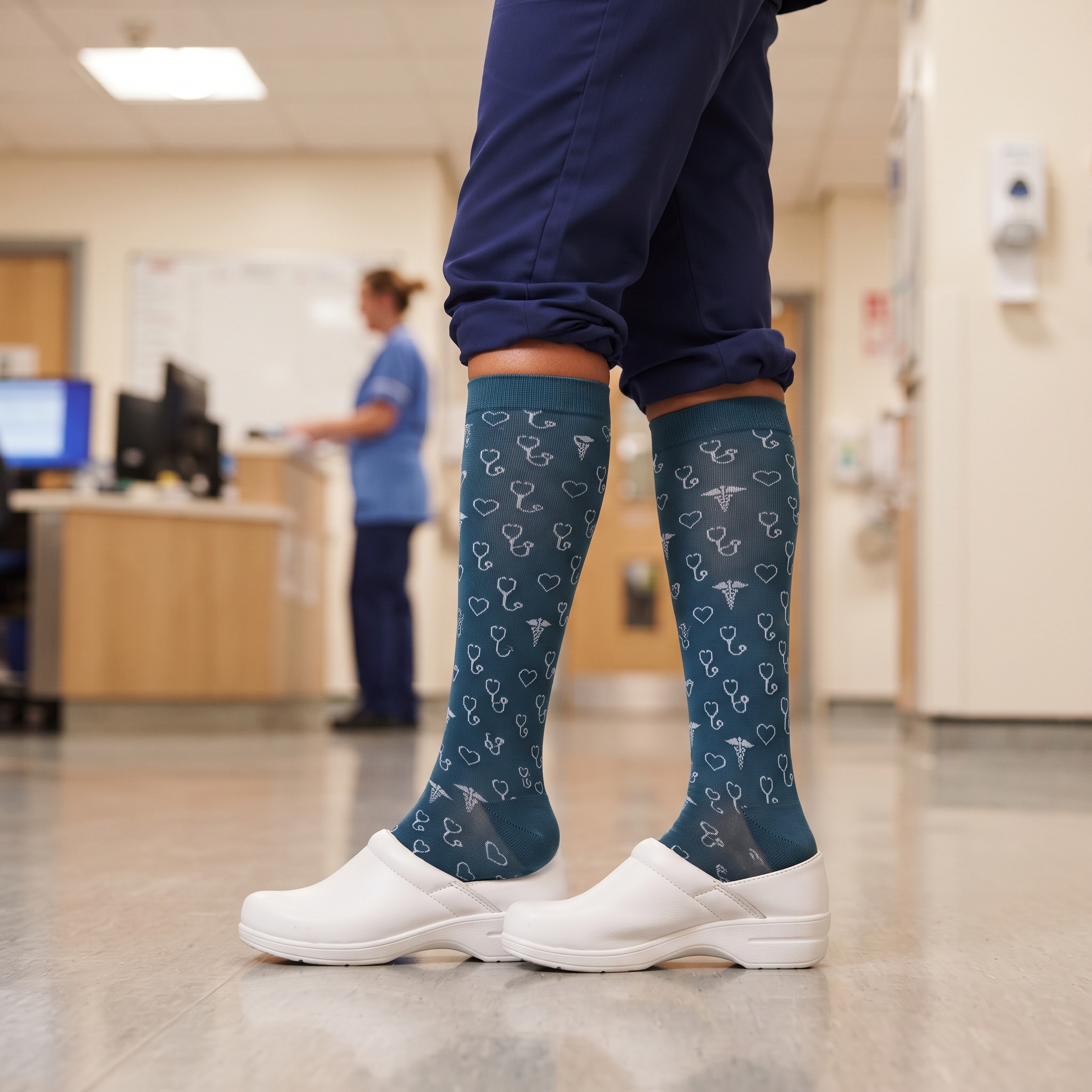
Compression socks aren’t just a fashion thing or something older people wear. For anyone on their feet all day — especially student nurses pulling long placements — they’re one of the simplest, most effective ways to look after your legs. This is why they work, what to look for, and the pair I wear every single shift.
Why Long Shifts Hurt Your Legs
When you stand or walk for hours at a time, gravity pulls blood down into your legs. Your muscles help pump it back up — but after 8, 10, 12 hours straight, they get tired. Blood and fluid pool in your lower legs and feet, which is what causes that swelling, heaviness, and aching by the end of the day.
Over time, that extra pressure can weaken the veins and lead to more persistent problems. As a student nurse, you’re standing all shift, rushing between wards, carrying equipment, and often skipping proper breaks. Your legs take the brunt of it — and they deserve better than being sore every single evening.
Looking after your body on placement is one of the best investments you can make — alongside saving money on the other essentials you need to get through training.
How Compression Socks Actually Help
Good-quality compression socks apply gentle, graduated pressure — tighter at the ankle and gradually looser further up the leg. This does three key things:
- Speeds up blood flow. They help your leg muscles push blood back up towards your heart more efficiently, so less fluid builds up in your feet and ankles.
- Reduces swelling. Less pooling means less puffiness at the end of the shift — your shoes will fit the same at 8pm as they did at 8am.
- Cuts that heavy, achy feeling. When circulation works well, your legs feel lighter. You’ll notice the difference the moment you sit down to take your shoes off.
- Supports vein health long-term. Consistent use lowers the strain on your veins — important when you’ll be doing this for your whole career.
What Makes a Good Pair — and What to Avoid
Not all compression socks are the same. Here’s what I learned trying different pairs through my training:
- They must stay up. If they slide down mid-shift, they bunch behind your knees and cut off circulation — worse than wearing none at all. Look for a wide, soft top band that grips gently without digging in.
- They need to breathe. 12-hour shifts get warm. Thick, cheap material makes your legs sweat and feels miserable. You want moisture-wicking fabric that stays comfortable all day.
- They should fit under uniform. Most wards require plain, neutral colours. Skin tones, navy, black — smart enough for placement but strong enough to do the job.
- Pressure matters. For daily wear on the ward, 15–20 mmHg is usually perfect — supportive but not so tight they’re a struggle to put on first thing in the morning.
Cheap pairs often skip these details — they’re too loose in the wrong places, they slide, and they don’t breathe. Investing in a proper pair costs a little more upfront but pays for itself in comfort and how long they last.
My Daily Routine — How I Wear Them
These small habits made the biggest difference:
- Put them on first thing. Before your legs start swelling — it’s much easier and they fit better all day.
- Wash gently. Cold wash, mild detergent, air dry — keeps the stretch and grip exactly where it should be.
- Rotate 2–3 pairs. Gives them a rest between wears so they don’t lose their shape. It also means you’re never caught short on laundry day.
- Listen to your legs. If one day feels harder than usual, rest them up when you get home — and remember to stay hydrated and move whenever you get a quiet moment on shift.
Who Should — and Shouldn’t — Wear Them
Perfect for: Long shifts, placement days, travel to and from hospital, standing study sessions, and anyone who notices swelling or aching by the end of the day.
Always check first: If you have existing circulation issues, diabetes, or leg ulcers, check with your GP or practice nurse before buying — you may need a specific prescription strength. For most healthy student nurses, 15–20 mmHg is exactly right.
Final Thought — Look After Your Legs, They Carry You Through
Your legs are your workhorse through nursing training. They carry you through every ward round, every emergency, every long shift. Looking after them isn’t indulgent — it’s essential. Good compression socks are one of the cheapest, simplest ways to make every day feel a little easier and every evening a little less sore.
I’ve worn these pairs through placement and beyond, and I wouldn’t start a shift without them. If you’ve been putting it off, give them a try — your legs will thank you.
My Go-To Compression Socks
Comfortable, stay-put, built for long shifts. The ones I wear every placement day.
Shop Now →More Student Essentials
Money-saving deals, placement kit, and student discounts — all updated every term.
Visit the Money Hub →

This blog is such a hidden gem I stumbled upon it by chance and now I’m completely hooked!
Glad you like it 🙂